
Finding My Ikigai as a Wedding Pianist
Around three years ago I was lucky enough to have a coach who introduced me to the concept of finding my Ikigai.
I was at a transitional moment in my life and had a feeling deep within me that my professional future and career, such as it was, lay in a different direction. At this moment, I had just started tentatively taking bookings to play the piano at weddings. My set-up was fairly basic, and I was at the very early stages of understanding what it meant to be a live musician at weddings, and whether this new sideline would have any longevity for me.
There are various definitions of Ikigai which you can look up. My understanding is that it’s the sweet spot of doing something you’re good at, passionate about, can make a living from, and is something for which there is a demand. I looked at my situation: my job met three of those criteria, but the most important one — passion — wasn’t there anymore. It used to be, but it had withered. What was once a career had become a job, and what used to be challenges I relished were now problems I had to endure.
I looked at my new side hobby. That also met three of the criteria — except I wasn’t earning anything like enough to live on, and the prospects of being able to do so seemed slim.
Reinvesting
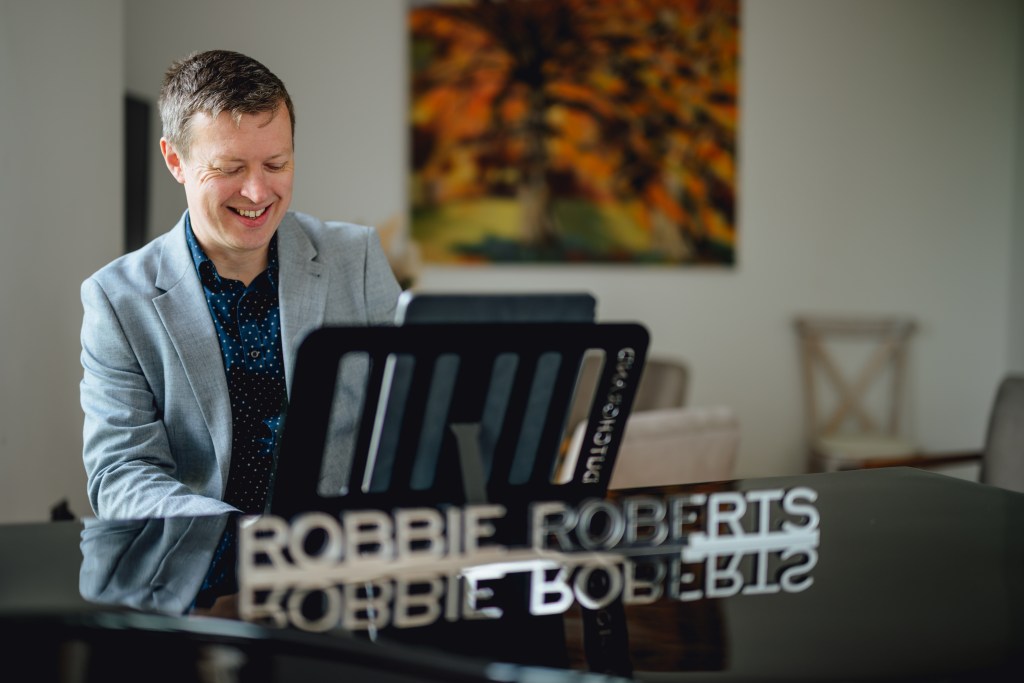
From that point — early 2022 — I decided to reinvest everything I was earning from the few piano events I was picking up back into my business. And it was a business: by 2022 I had set up as a sole trader and even had an accountant. Reinvesting meant new equipment, including buying a baby grand shell, another digital piano, and investing in all aspects of marketing — brand identity, logo and colour scheme, video production, website, advertising, and events.
The effect of this steady drip-feed of reinvestment paid off. Bookings increased, my profile grew, and my overall set-up became more professional.

Rebalancing
Alongside this, I began to gradually reduce my hours at the university where I worked. First I went down to 90% (every other Friday), and eventually I dropped to 70% over three days. I am very lucky to have had such a supportive line manager who understood that I was trying to strike a balance and, without putting university business at risk, helped me do exactly that.
With additional days available — for bookings or simply for recovery after busy weekends — I was able to pursue my piano business more seriously.
And I loved it. I loved the feeling of getting a new booking. I loved talking to couples who were excited to have found me online or at an event, and hearing their vision for their day. I loved meeting other suppliers and arriving early to set up. I loved the buzz of playing live, especially the thrill of playing as a bride walks down the aisle.
I loved when people came over to say how much they enjoyed the music, and I loved reading the online reviews afterwards.
Going Full-Time
So, late last year, I told my manager at the university that I wanted to go full‑time. It was a big decision. It still feels big. But it feels right.
I have just over a couple of months to go before I walk out of the university for the last time. But knowing I’m going has given me the impetus to develop my piano business further. I now have seven piano pupils — one in person, six online. Teaching is something else I love doing. My pupils are all at different stages, but are all passionate about improving — and that passion is contagious.
I’d love to take on more, and will do, but I’ve reached the limit of how many I can teach until I leave the university in April.


Finding my Ikigai
So, I feel like I’m at a pivotal moment in my life. In writing this short article I’ve enjoyed reflecting on my incremental steps over the past three years or so. I look forward to looking back on this point in the future, to see where it was in this new adventure I’ve embarked upon.
But for now, I feel energised by this. It’s a job, it brings in money, but it’s more than that. It might just be that I’m finding my Ikigai. I really hope I am.